Best Kids Learning Tablets in October 2026

Amazon Fire 7 Kids tablet, ages 3-7. Top-selling 7" kids tablet on Amazon. Includes ad-free and exclusive content, easy parental controls, 10-hr battery, 16 GB, Blue
- SAVE UP TO $70 WITH A KID-PROOF TABLET AND AMAZON KIDS+!
- 2-YEAR WORRY-FREE GUARANTEE-FREE REPLACEMENT IF IT BREAKS!
- ENDLESS FUN & LEARNING WITH 1 YEAR OF AMAZON KIDS+ INCLUDED!



LeapFrog LeapPad Academy Kids’ Learning Tablet, Green
- ACCESS 20+ EDUCATOR-APPROVED APPS THAT BOOST ESSENTIAL SKILLS!
- EXPAND LEARNING WITH HUNDREDS OF EXTRA GAMES, VIDEOS, AND EBOOKS!
- ENJOY A 3-MONTH TRIAL OF LEAPFROG ACADEMY FOR ENDLESS FUN!

Peacurh Trilingual Learning Toy Tablet with Music & Sound, Montessori Speech Musical Therapy Toys, Gifts for Boy, Girl, Baby, Toddler, for Age 1, 2, 3 Year Old (12-18 Months)
- ENGAGE KIDS WITH TRILINGUAL LEARNING ACROSS 39 FUN ICONS!
- FOUR INTERACTIVE PLAY MODES: LEARN, QUIZ, MUSIC, AND PRETEND!
- SAFE, PORTABLE DESIGN PERFECT FOR ON-THE-GO LEARNING ADVENTURES!

hahaland 5-Language Learning Tablet Toy for Toddler 1-3 with Speech Therapy
- 90+ ENGAGING MODULES IN MULTIPLE LANGUAGES SPARK EARLY LEARNING!
- 4 PLAYFUL LEARNING MODES ENHANCE CREATIVITY AND PROBLEM-SOLVING SKILLS.
- DURABLE AND PORTABLE DESIGN ENSURES SAFETY FOR ACTIVE TODDLERS!

LeapFrog 2-in-1 LeapTop Touch
- 2-IN-1 DESIGN: TRANSFORMS FROM KEYBOARD TO TABLET FOR VERSATILE PLAY.
- ENGAGING ROLE-PLAY: KIDS CAN EMAIL SCOUT AND CUSTOMIZE LEARNING!
- FIVE VIBRANT LEARNING MODES: ABCS, NUMBERS, GAMES, MUSIC, AND MESSAGES!

PEICHENG Kids Tablet 7 inch Android 12.0 for Toddler, 4GB RAM 32GB ROM Bluetooth IPS Screen Parental Control Dual Camera Shockproof Case for Educational Games, (Blue)
-
FAST PERFORMANCE WITH ANDROID 12, 4GB RAM, AND 32GB EXPANDABLE STORAGE.
-
PARENTAL CONTROLS ENSURE ONLINE SAFETY AND LIMIT SCREEN TIME EASILY.
-
EYE PROTECTION FEATURES AND HD DISPLAY FOR SAFE, FUN LEARNING EXPERIENCES.

Qiaojoy Kids Learning Tablet Educational Learning Pad for Toddlers 2-5
-
BILINGUAL FUN: SWITCH BETWEEN ENGLISH AND SPANISH EASILY FOR LEARNING!
-
INTERACTIVE LEARNING: ENGAGING SOUNDS AND QUESTIONS SPARK CURIOSITY!
-
SCREEN-FREE PLAY: REDUCES SCREEN TIME WHILE ENHANCING FAMILY INTERACTION!

Amazon Fire HD 8 Kids Pro tablet (newest model), ages 6-12. Bright 8" HD screen, includes ad-free content, parental controls, 13-hr battery, slim case for older kids, 64GB, Hello Teal
-
SAVE $100 ON AN ALL-IN-ONE TABLET PLUS A YEAR OF AMAZON KIDS+!
-
2-YEAR WORRY-FREE GUARANTEE: HASSLE-FREE REPLACEMENTS FOR BROKEN DEVICES!
-
FAST PROCESSOR AND 13-HOUR BATTERY FOR ALL-DAY EDUCATIONAL FUN!
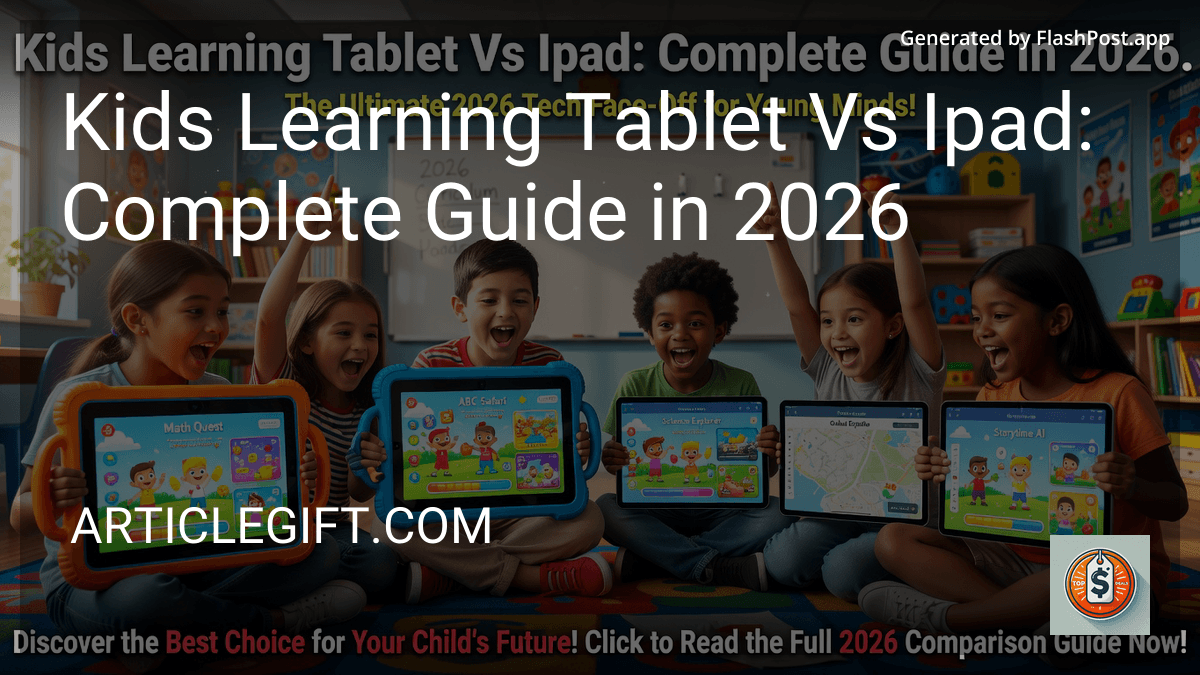
Kids Learning Tablet Vs Ipad: Complete Guide in 2026 is no longer a simple “toy versus premium device” debate. For most parents, it’s really about screen time with a purpose, how much control you want, and whether your child needs a learning tool, an entertainment device, or both.
Here’s the hard truth: the wrong tablet can turn into an expensive distraction fast. I’ve seen families buy a sleek general-purpose tablet for school apps, only to realize their child spends far more time watching videos than reading, practicing math, or creating anything meaningful.
The good news? If you understand the differences, choosing gets much easier. You’ll learn how kids learning tablets compare with iPads in 2026, what features actually matter, which option makes sense by age and budget, and the smartest next steps before you buy.
Kids Learning Tablet Vs Ipad: Complete Guide in 2026 for Parents Who Want the Right Fit
The biggest difference is intentional design.
A kids learning tablet is usually built for younger users. It often includes a child-safe interface, educational games, stronger parental controls, shock-resistant construction, and curated content designed around early learning.
An iPad-style tablet, on the other hand, is a general-purpose device. It typically offers more power, better app variety, smoother performance, and a longer useful life, but it also requires more setup and supervision to truly function as a kid-friendly learning device.
That’s why this choice matters. If your child is 4, 6, or 8, you may prioritize simplicity and safety. If your child is 9, 11, or entering middle school, flexibility and academic app support may matter more.
What’s the Real Difference Between a Kids Learning Tablet and an iPad?
At a glance, both can run apps, stream content, and support reading or learning activities. But in real-life use, they behave very differently.
Kids learning tablets are built around guardrails
Most child-focused tablets put the learning environment front and center. The home screen is simpler, content is filtered, and it’s easier for parents to limit games, manage screen time, and avoid accidental purchases.
That makes them a strong option for:
- Preschoolers and early elementary kids
- Parents who want easy parental controls
- Families looking for a more affordable starter device
- Children who are rough on electronics
iPads offer flexibility, longevity, and stronger performance
A general-purpose tablet usually handles multitasking better, loads apps faster, and supports a broader range of educational apps, reading platforms, creativity tools, and school communication systems.
That’s especially useful for:
- Older kids
- Homeschooling or hybrid learning
- Drawing, writing, coding, and media creation
- Families who want one device to grow with the child
The tradeoff is supervision
Here’s the thing: more freedom cuts both ways.
A premium tablet can absolutely become a great student device, but only if you take time to configure content restrictions, app permissions, downtime, and family settings. Without that setup, it often becomes a very polished entertainment machine.
Kids Learning Tablet Vs Ipad: Complete Guide in 2026 by Age Group
Age is one of the fastest ways to narrow your choice.
Ages 3 to 6: Kids learning tablets usually make more sense
For younger kids, simple wins. They benefit most from guided educational content, big icons, tactile cases, and a device that doesn’t overwhelm them with too many app choices.
If your goal is phonics, counting, read-alongs, shapes, beginner problem-solving, and limited screen time, a kids educational tablet is often the better fit.
Ages 7 to 10: It depends on how your child uses tech
This is the crossover stage.
If your child mostly needs:
- reading practice
- math games
- school-approved learning apps
- travel entertainment
a kids learning tablet may still work well.
But if they’re starting to use:
- digital homework platforms
- typing tools
- creative apps
- video lessons
- research tools
an iPad-style device becomes much more practical.
Ages 11 and up: A general-purpose tablet often wins
At this stage, school needs get more complex. Kids may need note-taking, presentation tools, cloud storage, language learning apps, productivity features, and better multitasking.
That’s where a more advanced tablet tends to justify itself. It’s less likely to be outgrown in a year.
What to Look For in Kids Learning Tablet Vs Ipad: Complete Guide in 2026
No matter which route you choose, these are the features I’d prioritize first.
-
Parental controls
Look for screen time settings, app approvals, content filters, web restrictions, and purchase controls. Strong parental controls matter more than almost any hardware upgrade.
-
Educational app ecosystem
A tablet is only as useful as the learning content available on it. Make sure it supports the reading, math, STEM, language, and creative apps your child will actually use.
-
Durability
Younger kids drop things. Choose a device with a sturdy build or pair it with a shockproof case and screen protection.
-
Battery life
Good battery life matters for road trips, school days, and avoiding constant charging battles. You want a tablet that can handle several hours of mixed use.
-
Display quality
A better screen improves reading comfort, drawing, educational videos, and eye strain management. This becomes more important as kids get older and spend longer sessions learning.
-
Storage space
Downloaded videos, offline books, games, and school apps add up quickly. Don’t underestimate how fast children’s content fills a device.
-
Ease of use
For younger children, intuitive navigation is crucial. For older kids, the ability to switch between learning apps smoothly can improve focus and productivity.
-
Accessory compatibility
Some children benefit from a keyboard, stylus, or even a wireless mouse for tablet setups when doing schoolwork or creative projects.
Why This Choice Matters More Than Parents Think
A tablet isn’t just a gadget. It shapes how your child interacts with information.
The right device can support:
- independent reading
- math confidence
- creative expression
- educational routines
- digital literacy
The wrong device often creates:
- overstimulation
- too much passive content
- constant battles over apps
- wasted money
- fast outgrowing of the device
I’ve found that parents are happiest when the tablet matches the child’s actual routine, not their imagined one. If your child loves drawing, a device that supports art apps may matter more than gaming power. If they need a simple safe device for long car rides and phonics games, complexity isn’t a benefit.
Benefits of a Kids Learning Tablet
A kids learning tablet shines when you want structure without much setup.
Key benefits include:
- Safer out of the box for younger children
- Simpler interfaces that reduce distraction
- Built-in educational games and learning paths
- Better beginner experience for first-time tablet users
- Often a more budget-friendly entry point, especially if you're comparing options like these affordable tablets for kids 2025
For many families, that ease is the whole point. You hand the tablet over and feel reasonably confident your child won’t wander into content you never intended.
Benefits of Choosing an iPad-Style Tablet
This route makes sense if you want room to grow.
The biggest advantages are:
- More robust educational app support
- Better speed and responsiveness
- Stronger tools for creativity, writing, and schoolwork
- Better fit for older children and preteens
- Longer usable lifespan before your child outgrows it
If your child likes art, for example, a more capable tablet may pair better with resources on choosing a kids drawing tablet with screen and other digital creativity tools.
Meanwhile, if you’re comparing broader options across the market, this roundup of kids tablets 2025 can help you benchmark feature sets and buying categories.
Kids Learning Tablet Vs Ipad: Complete Guide in 2026 for Different Family Needs
There isn’t one universal winner. There’s only the right choice for your home.
Choose a kids learning tablet if...
- Your child is under 8
- You want strong content boundaries
- You prefer simple setup
- Durability is a top concern
- You want a device mainly for educational games, reading, and light media
Choose an iPad-style tablet if...
- Your child needs a device for school and fun
- You want access to more advanced learning apps
- Your child creates, draws, types, or edits
- You’re comfortable managing settings
- You want a tablet that can last several years
Choose neither if...
Yes, sometimes that’s the smartest answer.
If your child mainly wants entertainment, you may be better off delaying the purchase or considering alternatives that encourage active play. For some families, screen-light options or occasional fun devices like those featured in guides to buy tabletop arcade machines may make more sense than another all-purpose screen.
Pro Tips From Real-World Use
After watching how kids actually use tablets, a few patterns stand out.
Pro tip: Don’t buy based on specs alone. Buy based on the three apps or activities your child will use most. If those work well, everything else is secondary.
Common mistakes to avoid
-
Buying too advanced too early
A younger child rarely needs a high-performance tablet if they’re only using alphabet games and story apps. -
Ignoring parental controls
Even the best device can become chaotic without time limits and content boundaries. -
Overvaluing entertainment features
A flashy screen and fast processor don’t automatically create better learning outcomes. -
Forgetting accessories
A rugged case, headphones, screen protector, and maybe a child-friendly stand often improve the experience more than a small hardware upgrade. -
Not planning for growth
If your child is on the edge of needing school tools, a basic kids tablet may feel too limited within months.
Non-obvious advice that helps
Set up a “learning-first” home screen. Put reading, math, language, and art apps on page one. Keep games and streaming tools buried deeper or locked behind permission settings.
💡 Did you know: Kids often use tablets more responsibly when they know exactly what the device is “for.” A tablet framed as a learning and creation tool tends to trigger fewer power struggles than one positioned mainly as entertainment.
How to Get Started Without Regret
If you’re stuck, use this simple decision framework.
Step 1: Define the main purpose
Ask yourself:
- Is this for early learning?
- Is this for school support?
- Is this for travel and entertainment?
- Is this for drawing, reading, or creativity?
You want one primary answer, not five.
Step 2: Match the tablet to your child’s age and habits
A child who breaks toys, taps random icons, and needs constant guidance needs a different device from a child doing homework and digital projects independently.
Be honest here. Aspirational buying usually backfires.
Step 3: Audit the apps your child needs
Check whether the tablet supports:
- reading apps
- math practice
- school portals
- handwriting or art tools
- video lessons
- offline use for travel
This step prevents expensive disappointment.
Step 4: Plan your setup before handing it over
Before your child uses it:
- enable parental controls
- create time limits
- approve apps
- remove distractions
- add a case and screen protection
This 20-minute setup can save months of frustration.
Step 5: Reassess after 30 days
Watch how your child actually uses the device. Are they learning, creating, and reading more? Or just bouncing between videos and games?
That answer tells you whether your purchase was truly the right fit.
Frequently Asked Questions
is a kids learning tablet better than an ipad for a 5 year old?
For most 5-year-olds, a kids learning tablet is usually better because it offers a simpler interface, stronger built-in safety features, and more age-appropriate educational content. An iPad-style device can work too, but it often requires much more parental setup and monitoring.
what is the best tablet for kids for school and learning?
The best tablet for kids depends on age, school requirements, and how independently your child works. Younger children often do better with a dedicated kids learning tablet, while older kids usually benefit more from a versatile tablet that supports homework, reading, creativity, and classroom apps.
can kids use an ipad for educational apps only?
Yes, but you’ll need to set up parental controls, app restrictions, and screen time rules carefully. Without those limits, a general-purpose tablet can quickly shift from educational use to mostly entertainment.
how long does a kids learning tablet last before kids outgrow it?
Many kids learning tablets work best for a few years, especially during preschool and early elementary stages. Once children need more advanced school tools, faster performance, or broader app support, they often outgrow them sooner than a general-purpose tablet.
should i buy a kids learning tablet or ipad in 2026?
Buy a kids learning tablet if you want simplicity, safety, and age-focused educational use for a younger child. Choose an iPad-style tablet if you want stronger performance, wider app support, and a device that can grow with an older child’s academic and creative needs.